Defect-Aware Image Denoising and Deblurring Network
EE5179 - Deep Learning for Imaging (KLA Project), IIT Madras
🔗 GitHub Repo | Project Report
Abstract
Image restoration plays a vital role in domains like medical imaging, surveillance, and industrial inspection, where recovering clean images from noisy or blurred inputs is essential. We propose a novel U-Net-based restoration network enhanced with Spatial and Channel Attention (SCA) and non-local blocks to capture both local and global dependencies. This design effectively removes noise and blur while preserving subtle yet critical defect features. By dynamically emphasizing important regions through attention mechanisms, the network ensures accurate and detail-preserving restoration.
Methodology
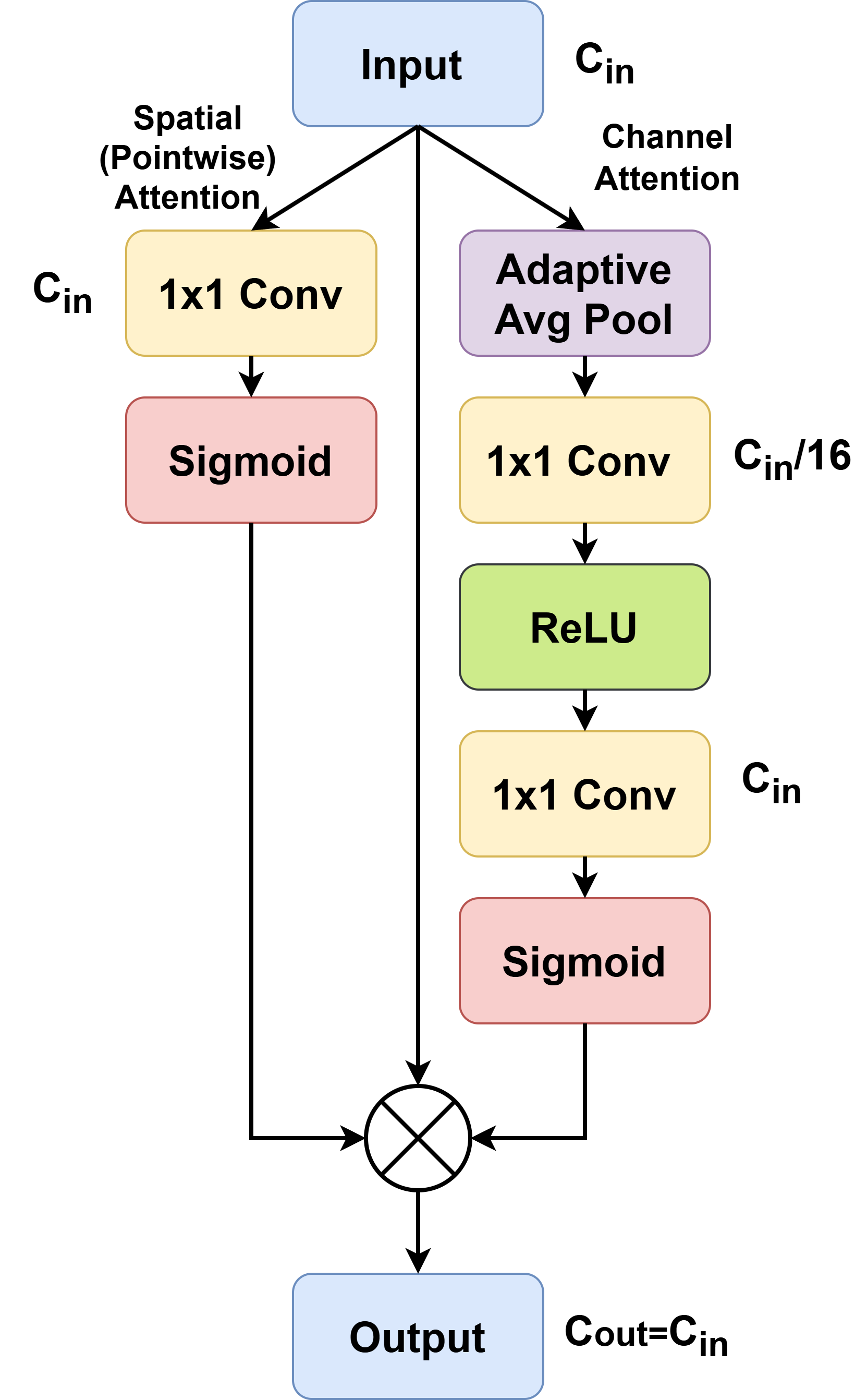
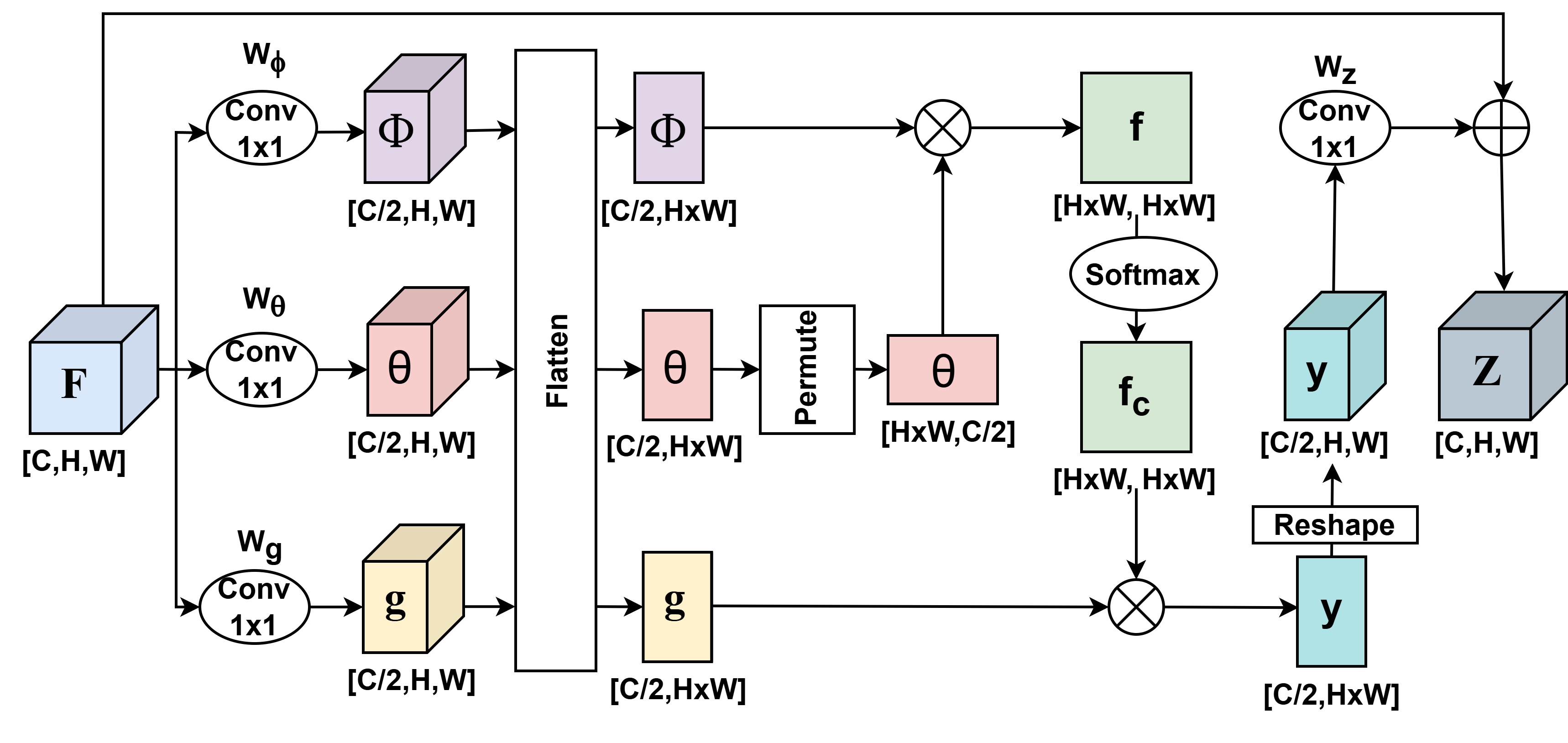
The proposed U-Net-based image restoration network integrates Spatial and Channel Attention (SCA) and non-local blocks to capture both local and global dependencies within images. The non-local block enhances contextual understanding from distant regions, preserving subtle and fine defect details. A residual connection improves gradient flow, enabling stable training and robust feature learning.
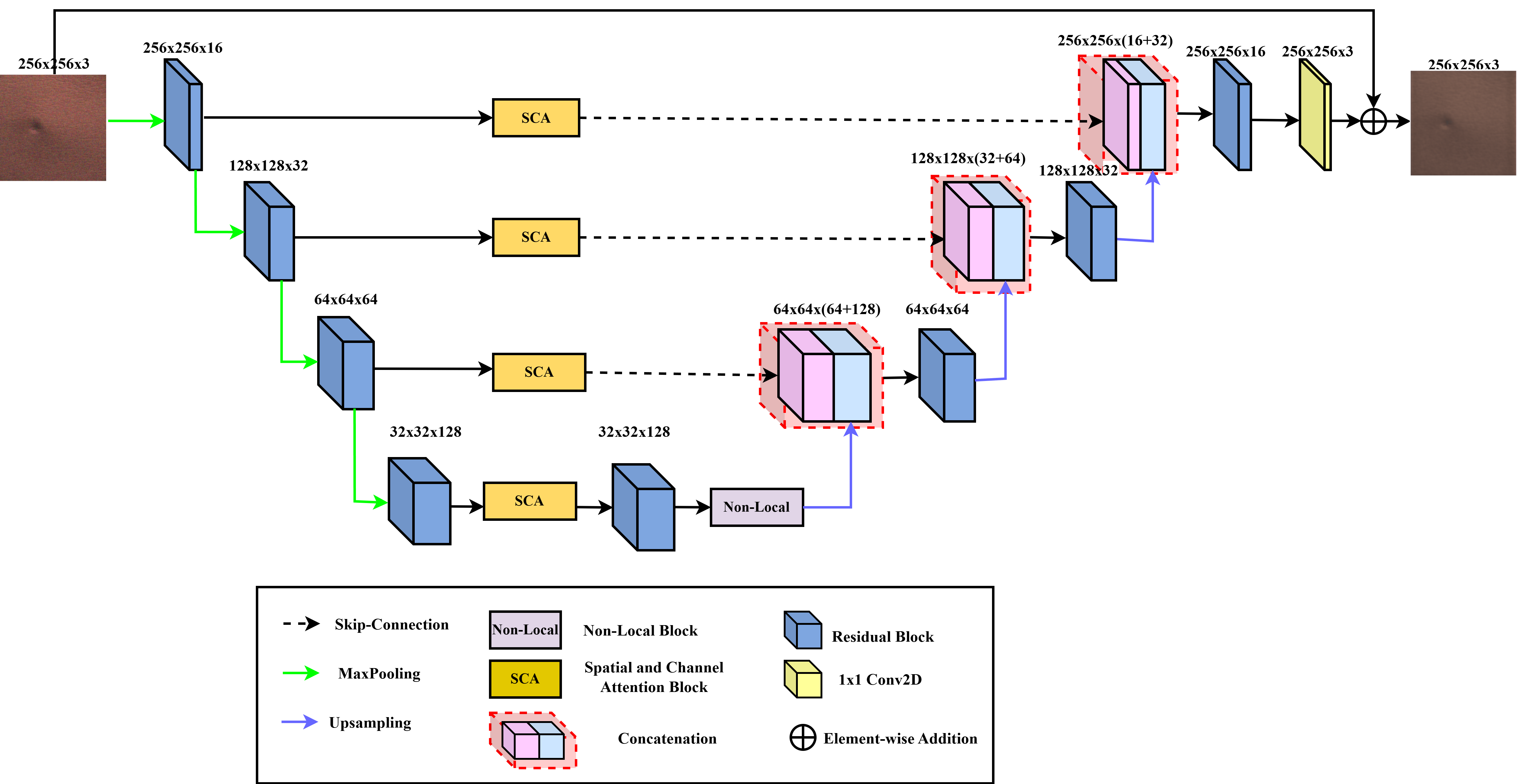
Training was performed on the MVTec Anomaly Detection (AD) dataset, where clean images were artificially degraded using noise and blur to form input–target pairs. The model was implemented in PyTorch with approximately 868K parameters and trained for 250 epochs on an NVIDIA T4 GPU using the Adam optimizer (lr = 0.001).
A composite loss function was used:
- Charbonnier Loss – ensures pixel-level accuracy
- SSIM Loss – maintains perceptual image quality
- Edge Loss – preserves fine edge structures
L = Lchar + 0.1·Ledge + 0.3·Lssim
Observations
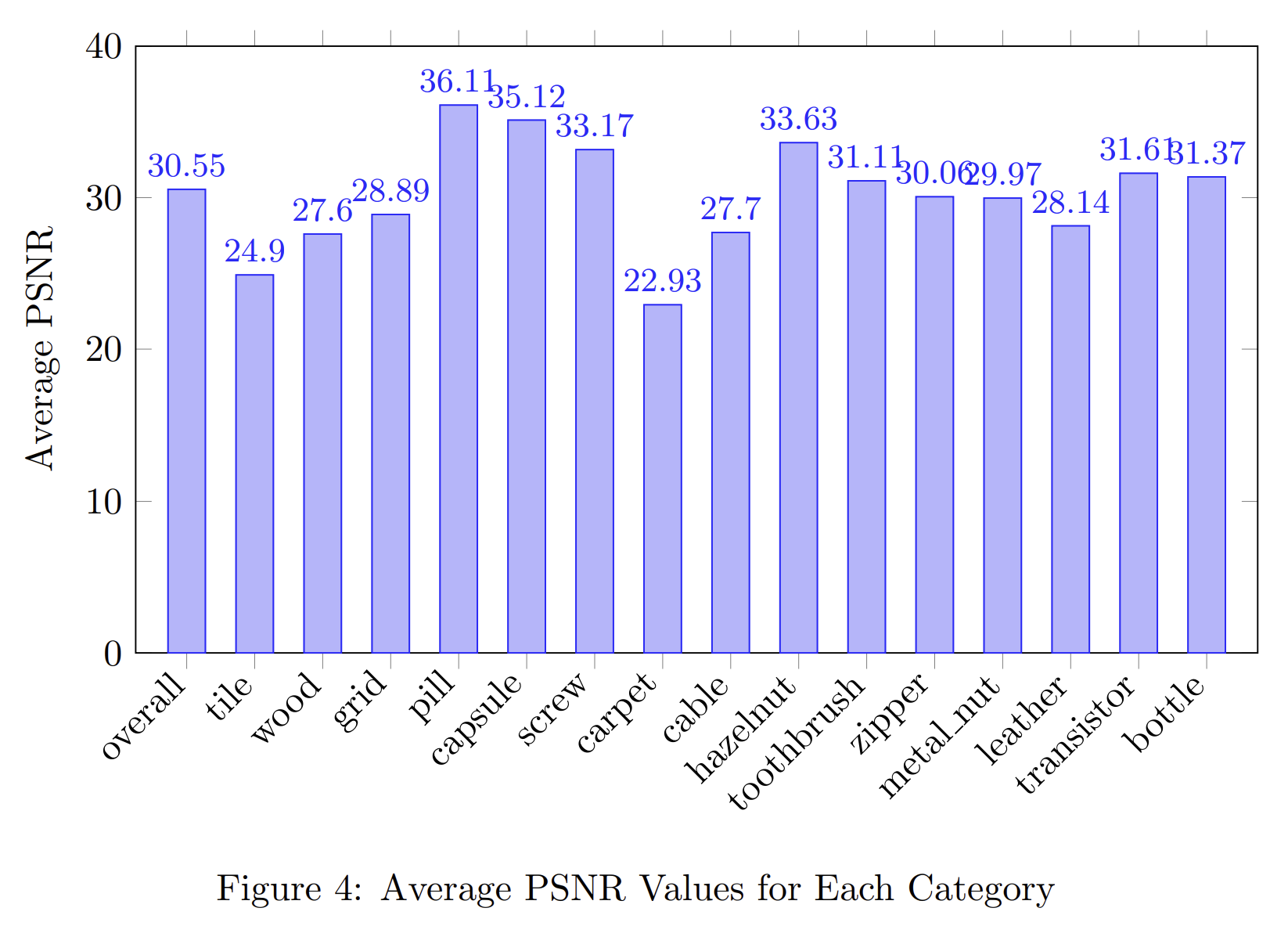
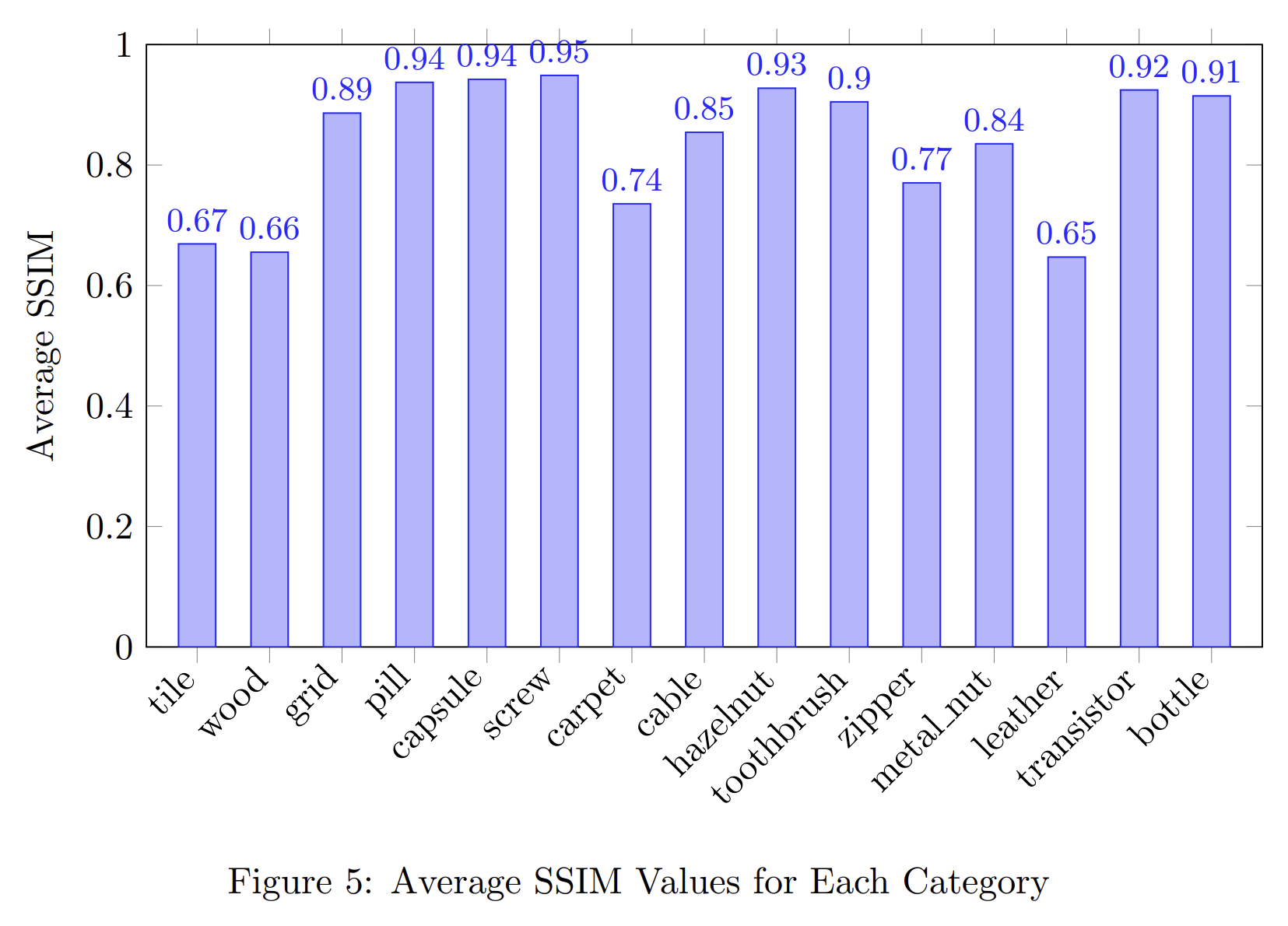
Model performance was evaluated using Peak Signal-to-Noise Ratio (PSNR) and Structural Similarity Index Measure (SSIM).
- Average PSNR: 30.55 dB
- Average SSIM: 0.845
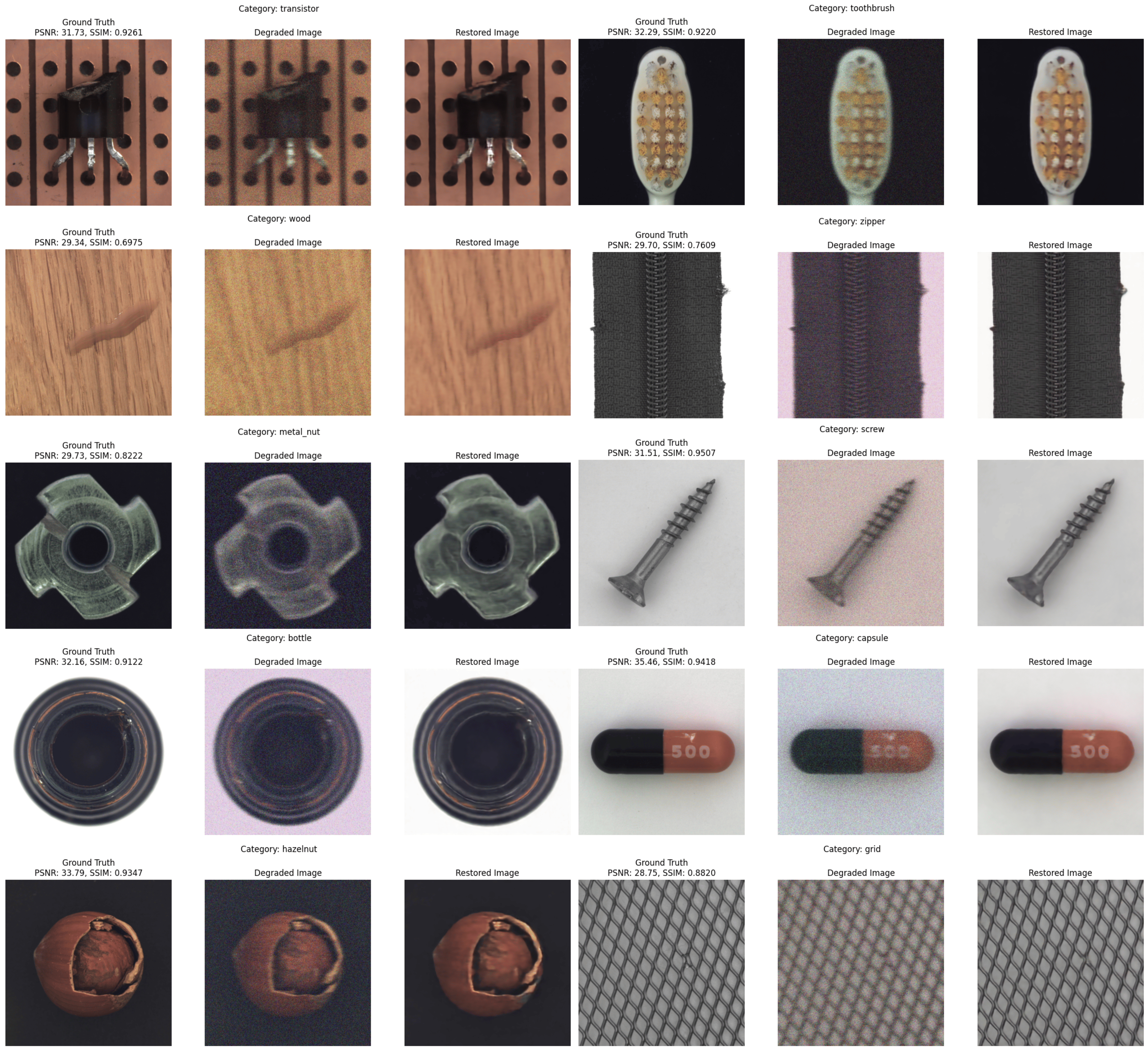
High PSNR and SSIM scores demonstrate that the model effectively restores image quality while preserving critical defect regions. Object types such as capsule, pill, and screw achieved the best restoration fidelity, confirming the network’s adaptability across textures and materials.
Conclusion
The Attention-Enhanced U-Net achieves superior image restoration performance by leveraging attention mechanisms and non-local context modeling. It effectively removes noise and blur while maintaining structural integrity and fine defect details.
This architecture presents a robust solution for defect-preserving image restoration in industrial and medical imaging applications.